Multi-agency threshold guidance
Working Together to Safeguard Children 2026 states that “the safeguarding partners should publish a threshold document, which sets out the local criteria for action in a way that is transparent, accessible and easily understood”.
Westmorland and Furness Threshold Guidance Refresh
The Westmorland and Furness Safeguarding Children Partnership has launched a refreshed suite of resources designed to support professionals in identifying need, assessing risk and ensuring children, families and unborn babies receive the right help at the right time.
The updated resources include:
- Westmorland and Furness Council Safeguarding Children Partnership Threshold Guidance (PDF , 1.22MB)
- WFSCP Understanding Level of Need and the Practice Response (PDF , 1.02MB)
- WFSCP Unborn Baby Threshold of Need (PDF , 125KB)
Together, these documents provide a consistent framework for assessing need, making safeguarding decisions and coordinating support across agencies.
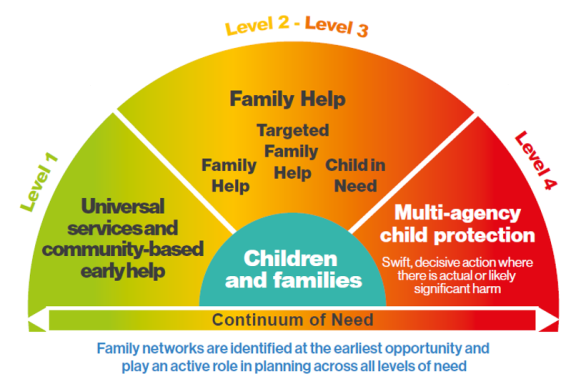
Understanding the Levels of Need
The Threshold Guidance helps professionals determine the most appropriate response to a child's needs and circumstances. Children, young people and families may move between levels as needs change over time. The aim is always to provide the right help at the right time.
Level 1: Universal Support
Most children and families will have their needs met through universal services such as schools, early years settings, health services and community provision.
At this level:
- Children are generally safe, healthy and achieving expected outcomes.
- Needs can be met through routine services.
- Families can access advice, guidance and support when required.
- Practitioners continue to monitor wellbeing and identify emerging concerns early.
Level 2-3: Family Help
Some children and families may require additional support to address emerging or unmet needs before they escalate.
At this level:
- Needs may be becoming more complex or require support from more than one service.
- A Family Help response provides early intervention and coordinated support.
- Practitioners work alongside families to identify strengths and areas where support is needed.
- Family networks are considered and involved wherever appropriate.
- The focus is on improving outcomes and preventing needs from escalating.
Level 4: Multi-Agency Child Protection and Specialist Intervention
This level applies when there are significant concerns about a child's safety, welfare or development, or where specialist statutory intervention is required.
At this level:
- A child may be suffering, or at risk of suffering, significant harm.
- Statutory assessment and intervention may be required.
- Multi-agency safeguarding arrangements are coordinated to protect the child.
- Child Protection processes and planning may be implemented.
- Intensive specialist support is provided to reduce risk and improve outcomes.
A Child-Centred Approach at Every Level
Regardless of the level of need, all practitioners should:
- Keep the child's lived experience at the centre of decision-making.
- Listen to the voice of the child and family.
- Work collaboratively with partner agencies.
- Share information appropriately and in a timely manner.
- Use professional curiosity and judgement.
- Consider what support family networks can offer.
The Threshold Guidance is designed to ensure that children, young people, families and unborn babies receive the right support, from the right services, at the right time.